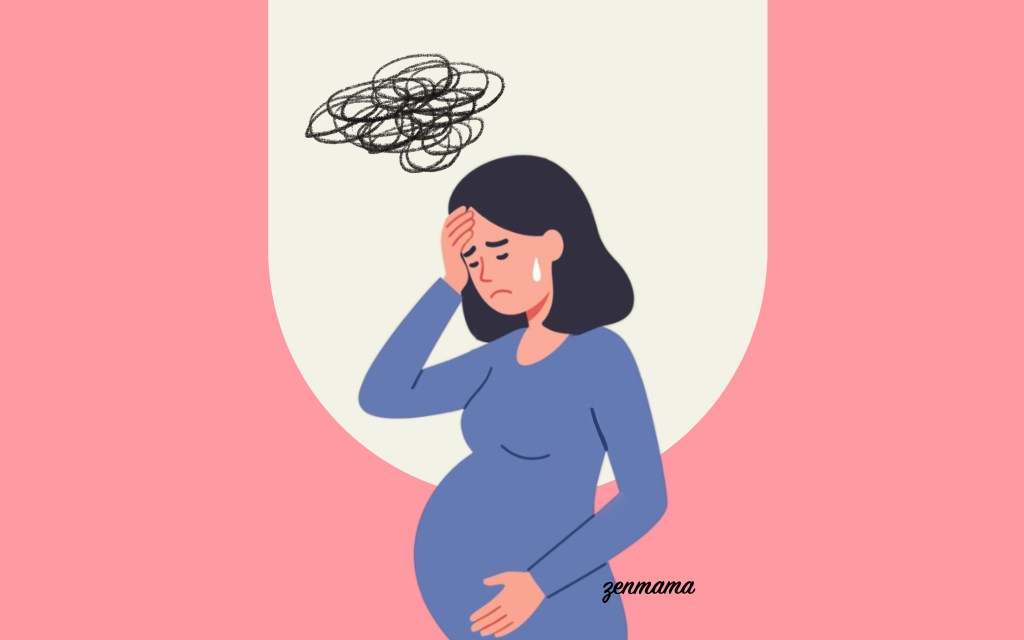
Continuing my son’s journey with chylothorax, this is part two of a three-part series. This article was particularly challenging to write, as it captures how we discovered the fluid in my baby’s chest and the obstacles we faced over the next two months before his premature birth.
Fluid in the chest at a routine scan
Despite the uncomfortable pregnancy symptoms of the first half of my pregnancy, everything was going smoothly. We didn’t expect anything to go wrong, until the 25th week (6.5 months) routine check up, where my gynaecologist kept unusually quiet as she scanned my abdomen a few times. My heart dropped. She explained that she saw some fluid in my baby’s chest, and I was immediately referred to a specialist for a more detailed scan.
The specialist confirmed that the fluid in my baby’s chest was called ‘fetal pleural effusion’. It can be caused by chromosomal abnormalities, congenital abnormalities, infections, or sometimes with no identifiable reason at all. In some cases, the fluid would resolve on its own. However, persistent fluid in the chest can interfere with lung development, and my baby’s lungs appeared smaller than expected, compressed by the surrounding fluid. If it continued to accumulate, it could prevent him from breathing independently after birth.
Following the diagnosis, the specialist recommended testing for viral infections and monitoring the situation for a week, to see if the fluid would resolve. I returned the following week hoping for good news. Unfortunately, the fluid was still there and the infection tests were negative. Looking back, we had quietly hoped it was an infection because that would have been more straightforward to manage. Instead, I was admitted for a procedure to drain out the fluid. At this point, I felt uneasy, but hopeful that it would be a one-time procedure, and my baby would be well after.
The first procedure
The procedure involved inserting a needle through my abdomen, through the amniotic sac, and into my baby’s chest to drain the fluid. It was invasive, but I was placed under general anaesthesia and was asleep throughout. The needle was inserted at least twice to drain both sides of the chest. The specialist also collected a sample of the fluid for laboratory testing, to rule out chromosomal or congenital causes. What was meant to be a short 15-minute procedure took much longer than expected. My baby was moving actively and possibly having a party in my womb, which required additional care and repositioning. After 78 minutes, the fluid was successfully drained.
After the procedure, I was brought to the observation area, with my hand held protectively over my belly. It felt numb from the painkillers, but I could feel my baby swimming in my belly, clearly happy from the fluid drainage. For a brief moment, I felt at ease that my baby was safe. I stayed overnight in the hospital before returning home the next day.
When the fluid returned
A week later, to our dismay, the fluid had returned. This time, we were referred to another specialist at a public hospital, which had more medical resources. The specialist also specialised in intricate procedures, such as inserting two shunts into my baby’s chest. A shunt is a small and soft silicone tube designed to continuously drain fluid from the chest into the amniotic sac. The idea was that the shunt would remain in place until delivery and be removed after birth as part of his treatment.
The appointment was unexpectedly intense. I was asked to pack a hospital bag, as admission was likely, though the exact duration wasn’t clear. At this point, I felt uncomfortable and overwhelmed from being away from my husband and my firstborn, as I felt like I was losing control of my life.
The procedure to insert the shunts was similar to the first procedure, but instead of being placed under general anaesthesia and asleep, I was wide awake and was injected with pain relief. I saw that the needle used to both the inject pain relief and the shunts were thick and long, and when it entered my abdomen, I felt a searing pain as it poked through layers of fat before entering the amniotic sac. It was both frightening and uncomfortable. The worst part was I had to remain still and quiet while the medical team worked. Eventually, the shunts were placed successfully, and I stayed in the hospital for two nights before being discharged. The procedure was done at the 29th week mark (7 months pregnant). For the first time in weeks, we felt cautiously hopeful that the shunts had worked and would drain the fluid from his chest until his estimated delivery date. We also hoped that that would have been the end of the complications until our baby’s birth.
Where the complications rolled in
Unfortunately, about four days after discharge, I began experiencing cramping. At first, I assumed it was Braxton Hicks contractions. It wasn’t constant, so I took paracetamol, as prescribed and rested.
The following day, the cramping became stronger and more regular, but I still assumed it was Braxton Hicks contractions. That night, I experienced cramping every eight minutes or less. They were painful and persistent, and I endured an entire night of fitful sleep. Thankfully, that morning, I had a scheduled appointment with the specialist who confirmed that I was having preterm contractions. I was admitted immediately for monitoring and given medication to stop the contractions. I was 30 weeks (7.5 months) pregnant then.
What I hoped was to be a one-night stay in the hospital became a seven-night admission. While the medical team focused on managing my contractions, I found myself constantly thinking about my firstborn at home. I missed him terribly, and every day away from him felt longer than the last.
Meanwhile, every kind of medication that could keep the contractions at bay wasn’t working. The medical team had hoped that the medication would help and we could then consider an early induction at 32 weeks (8 months), and my baby would be transferred to the care of the neonatal team at the Neonatal Intensive Care Unit (NICU). What made matters worse was that the shunts had become clogged and were no longer effectively draining fluid from my baby’s chest. This increased concerns about the development of my baby’s lungs, and if he could successfully breathe on his own after birth. Initially, I intended to deliver my second-born naturally, but in the end, I opted for a planned Caesarean section, as it would allow the neonatal team to intervene immediately and save my baby.
The breaking point
After five days of continuous contractions, I felt physically and emotionally exhausted. I was tired. My abdominal muscles were sore, and I felt like my body was giving up on me, and it no longer responded to any medication. The pain was relentless! Despite having contractions, I wasn’t clinically in labour as there was no dilation or bloody show.
I reached a point where I felt I could not continue like this much longer. I broke down and surrendered. Because it was a Saturday, and a weekend then, the medical team suggested waiting two more days for the full medical team and medical resources to be available for my baby’s delivery. I agreed. I just wanted the safest environment for my baby.
However, the two days before the delivery was one of the most torturous periods yet—I was put on complete bed rest and only allowed small amounts of food and drink. I wasn’t even allowed to use the washroom to take a shower! I felt vulnerable, restricted, and exhausted. Despite the discomfort, I felt hopeful that once my baby was born, he could receive direct medical attention, without needing to go through a procedure through me.
The traumatic delivery
On the day of delivery, I first underwent another procedure to drain the fluid in my baby’s chest. I was still having strong currents of contractions about every two to four minutes during the procedure, and I’m unsure if it was because of the contractions or my battered and bruised body, but my water broke suddenly. A flood of water gushed out of me! The water wasn’t clear, it was brown, like dried blood. Panic flooded through me. The blood-stained the sheets on the gurney. But it didn’t bother me. All I could worry about was if my baby was okay, and if he was going to survive the ordeal.
After the procedure, I was rushed to the operating theatre for an emergency Caesarean. I was helped on to the operating table and received spinal epidural, and my husband arrived shortly after. We held hands as the surgery began. All through the surgery, my stomach was in knots, and worrying about my baby. I also felt nauseous as a side effect of the epidural.
While worrying, I felt a couple of shoves on my abdomen. My baby was delivered. But there was no immediate cry of a baby. Instead, I could hear the medical team working at a corner of the operating theatre. My anxiety reached its peak—did my baby make it? Was he okay?
After what felt like a really long time, I heard a faint cry from across the room. Relief washed over me. He lived to fight another day! While the team was working on saving my baby, I didn’t get to see him. And I was okay with the arrangement, I just wanted him to receive the best care. Sometime while I was getting cleaned up, my baby was transferred to the NICU, and my husband was called to join them.
Recovery for everyone
When I returned to the ward, I felt nauseous and dizzy, and vomited a few times. I struggled to eat or drink, and was on drips to settle the symptoms, and given a blood transfusion, I guess for the amount of blood lost. When my husband returned from the NICU, he looked shaken, but shared that our baby was stable. He didn’t share too many details knowing that I was still recovering.
After my baby was born, one thing was certain—I became a mother of two. I rested soundly missing my firstborn who was at home and well, and my second-born, although premature and born two days shy from turning 31 weeks (7.5 months), I hoped with all my heart that he would pull through. I knew without a shred of doubt, I would walk every step of the way with my sons.
In the next and final part, I’ll share more about his treatment in the NICU, and the rest of my recovery, as well as his journey with chylothorax.
** This article is part two of a three-part series on my experience with my baby’s chylothorax **


Leave a Reply